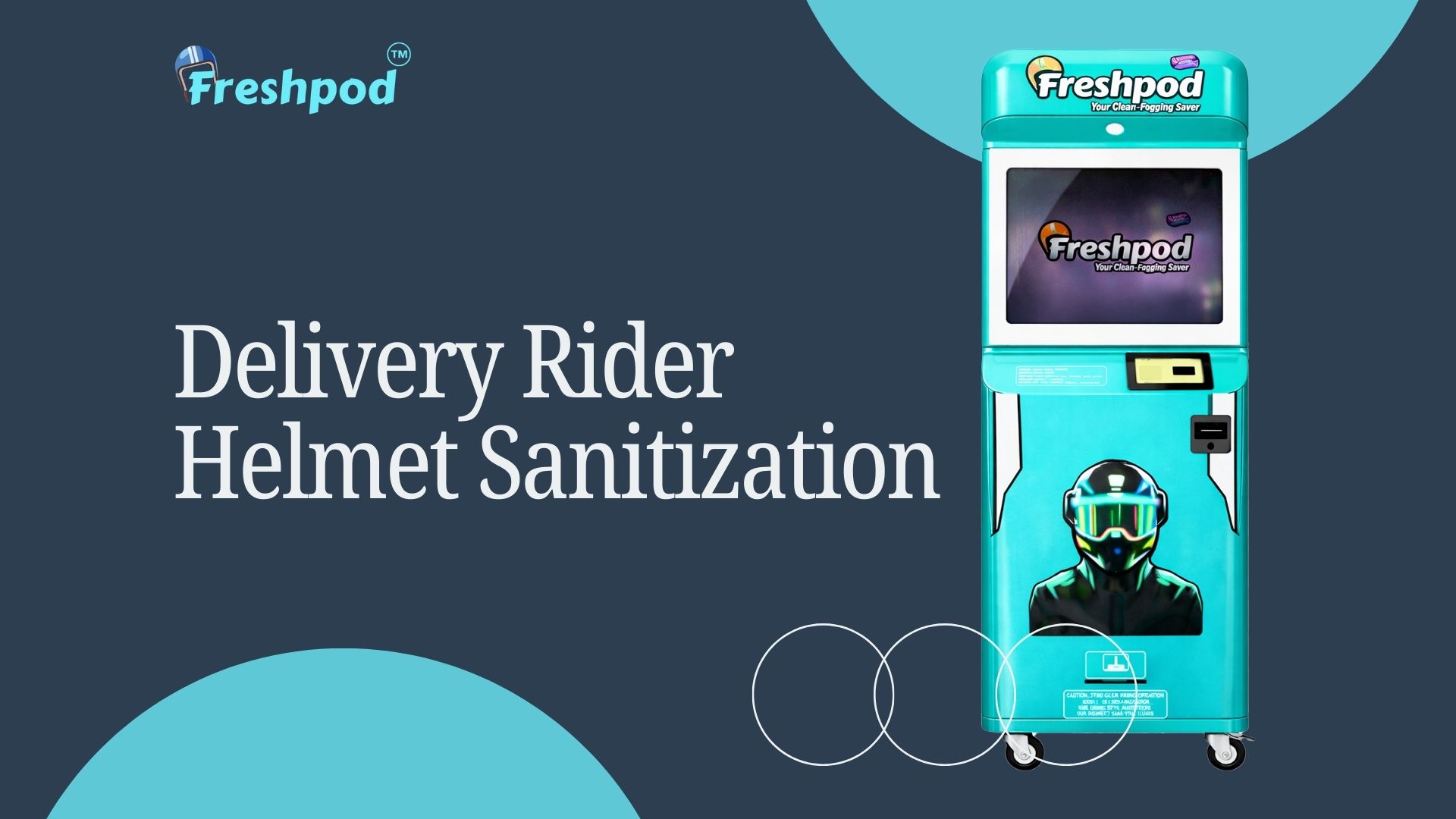
Why Food Delivery Riders Need Helmet Sanitization
Across India, thousands of delivery riders power platforms like Swiggy, Zomato, ONDC partners, and local logistics services. Their job demands speed, endurance, and consistency — often 10–14 hours a day on the road. What is less visible is the hygiene burden created by constant helmet use. Prolonged sweating, heat exposure, pollution, and shared helmets turn protective gear into a microbial hotspot. The result is not just odor — but preventable infections, discomfort, and lost earnings. Helmet sanitization is no longer optional in delivery operations; it is a health safeguard.
Work Conditions That Accelerate Contamination
Delivery riders typically cover 200–400 km per day with 50–100 delivery stops. Helmets remain on for most of the shift, trapping heat and moisture. Internal temperatures can rise to 35–40°C, especially in peak summer. Add dust, traffic pollution, and monsoon humidity — and the internal padding absorbs sweat and environmental contaminants continuously. In some hubs, helmets are rotated among multiple riders, multiplying exposure risks. Compared to occasional commuters, delivery riders experience far higher microbial accumulation due to duration and intensity of use.

The Microbiology Behind Helmet-Related Infections
Heavy sweating — often 1–2 liters per shift in hot weather — saturates helmet padding with moisture, salts, skin cells, and oils. This environment supports rapid growth of bacteria such as Staphylococcus aureus and Pseudomonas aeruginosa, along with fungi like Aspergillus and Malassezia. In warm, moist conditions, bacterial populations can multiply exponentially within hours. Odor is the first warning sign; persistent contamination leads to folliculitis, fungal scalp infections, acne flare-ups, and chronic irritation. Without structured sanitization, riders face continuous re-exposure from their own equipment.
Shared Helmets and Cross-Contamination Risks
Fleet hubs that rotate 20–100 helmets among riders daily create cross-contamination pathways. If one rider has a scalp infection, fungal condition, or antibiotic-resistant bacteria, pathogens can transfer through shared padding. Subsequent riders inherit those microbes, often unknowingly. Over time, repeated exposure increases the likelihood of recurring infections. For fleet operators, this introduces operational risk, potential liability, and reduced rider retention due to preventable health issues.
Health Problems Directly Affect Rider Income
For gig workers, health interruptions mean immediate income loss. Severe folliculitis or fungal infections can require 3–7 days off work. Recurring scalp issues reduce comfort and concentration during long shifts. Even a single missed day can cost ₹500–1500 in earnings. Long-term discomfort may push riders to avoid helmets — compromising safety — or leave the platform entirely. Consistent helmet sanitization reduces downtime, improves rider confidence, and supports workforce stability.
Why Basic Cleaning Methods Fail
Surface wiping removes visible dust but does not penetrate foam layers. Sprays often add moisture, encouraging further microbial growth if not dried completely. Sun exposure may reduce some surface bacteria but cannot eliminate deeply embedded colonies. Because delivery riders generate heavy sweat daily, partial cleaning allows rapid regrowth within 24–48 hours. Effective sanitization must reach inner padding layers without damaging structural foam or adding moisture.
A Structured Sanitization Model for Delivery Operations
High-usage environments require fast, dry, and repeatable sanitization cycles. FreshPod is engineered for delivery hubs and fleet ecosystems — compact installation, QR-enabled rider access, and a 3–5 minute dry cycle using UV-C and ozone to eliminate 99.9% of bacteria, viruses, and fungi. No water, no chemicals, and no foam degradation. For fleets, this extends helmet lifespan and reduces replacement costs. For riders, it minimizes infection risk and protects daily earnings. International innovation awards across Serbia, BRICS nations, and IPITEX Bangkok further validate its hygiene technology.
Frequently Asked Questions
Why do delivery riders require more frequent helmet sanitization?
Extended 10–14 hour shifts, heavy sweat saturation, pollution exposure, and shared helmets create significantly higher microbial loads compared to regular commuters.
What health risks are linked to contaminated helmets?
Common issues include folliculitis, fungal scalp infections, acne, rashes, odor buildup, and recurring irritation due to continuous bacterial and fungal exposure.
How does structured sanitization benefit delivery fleets?
It reduces rider sick days, improves retention, extends helmet lifespan, lowers replacement costs, and supports consistent hygiene standards across hubs.