
How Sweat Turns Helmets Into Germ Hotspots
During a hot ride, sweat builds quickly beneath your helmet. What feels like temporary moisture doesn’t simply disappear when you take it off. Instead, that sweat seeps deep into the liner and foam, carrying nutrients that microbes use to grow. Within days, a previously clean helmet can shift into an active germ hotspot. Understanding this transformation explains why odor appears, irritation begins, and simple airing-out rarely solves the root issue.
Sweat: More Than Just Water
Although sweat is mostly water, it also contains sodium, urea, lactic acid, amino acids, and trace skin oils. These compounds form a nutrient-rich residue once moisture settles into helmet padding. The warm, slightly acidic environment left behind is ideal for common skin bacteria and environmental fungi. Even when the surface feels dry, microscopic nutrients remain embedded within the fibers.
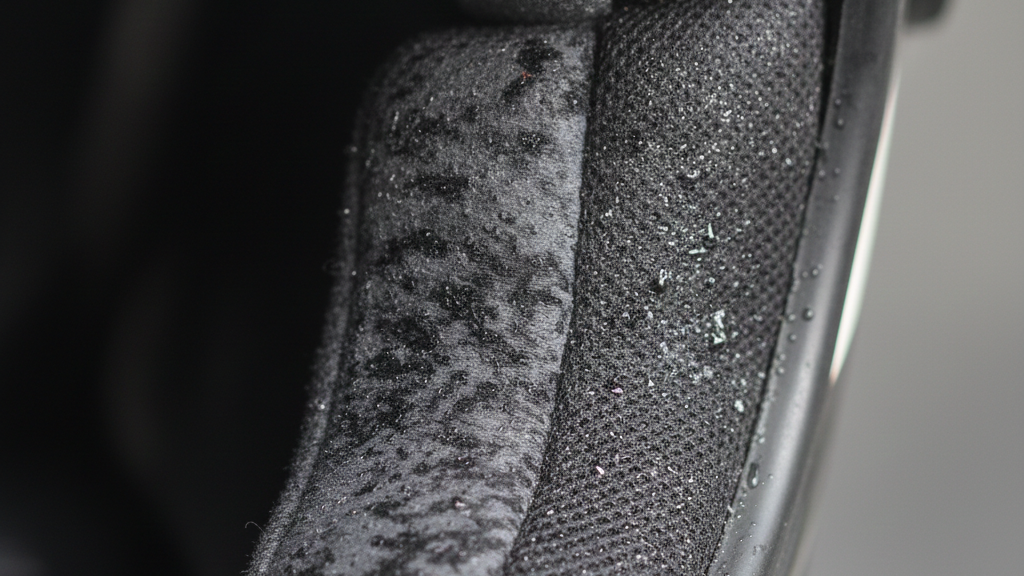
Why Helmet Padding Holds Moisture So Easily
Helmet liners are designed to absorb impact and provide comfort, which means they are porous and layered. These materials trap sweat within tiny air pockets and fabric weaves. Limited airflow inside the helmet slows evaporation, especially in humid weather. As a result, moisture can persist for hours — sometimes days — between rides.
The Rapid Growth Phase
Once nutrients and moisture are present, microbes begin multiplying. Skin flora such as Staphylococcus species and yeast like Malassezia can colonize the liner first. As proteins break down, odor-causing compounds are released. Over 24–72 hours, populations can increase dramatically under warm conditions, allowing additional organisms like Pseudomonas or environmental fungi to establish themselves. What started as simple sweat becomes a self-sustaining microbial ecosystem.
Why Hot and Humid Rides Make It Worse
In regions where temperatures frequently exceed 35°C and humidity remains high, helmet interiors stay warm and damp longer. Extended commuting or delivery shifts mean repeated sweating without full drying cycles. Urban dust and pollution add extra organic particles, giving microbes even more material to feed on. Shared helmets further intensify the microbial load by introducing new strains.
Drying Reduces Moisture — Not Microbes
Sun-drying and surface sprays may reduce temporary odor but rarely eliminate deep contamination. UV rays from sunlight do not penetrate thick padding layers, and sprays often treat only the top surface. Residual nutrients remain, allowing microbes to rebound quickly once new sweat is introduced. Without targeted disinfection, the hotspot cycle simply repeats.
Breaking the Sweat-to-Germ Cycle
FreshPod uses a dry dual-action process combining UV-C light and ozone to neutralize microbes at the cellular level. The technology penetrates folds and inner padding without adding moisture, eliminating 99.9% of bacteria, viruses, and fungi in just 3–5 minutes. By removing both active microbes and odor-causing compounds, it prevents sweat from restarting the growth cycle after each ride.
Frequently Asked Questions
How fast can microbes grow after a sweaty ride?
Under warm conditions, microbial populations can begin multiplying within 24 hours and increase significantly within 48–72 hours if moisture remains.
Why doesn’t sun-drying fully solve the problem?
Sunlight reduces surface moisture but does not penetrate deep padding layers where microbes and nutrients remain.
How does FreshPod stop sweat-related germ growth?
Its dry UV-C and ozone cycle eliminates 99.9% of bacteria, viruses, and fungi without adding moisture, preventing regrowth after rides.