
Is Your Helmet Making You Sick?
After a long ride, removing your helmet often feels like relief. But if you regularly experience itching, headaches, sinus discomfort, or skin irritation, your helmet itself may be contributing. Because it sits tightly against your scalp and face, it traps heat, sweat, breath, and environmental pollutants. Over time, this creates a confined micro-environment where microbes thrive. What feels like everyday riding fatigue may actually be repeated exposure to buildup inside your helmet.
Symptoms Riders Commonly Overlook
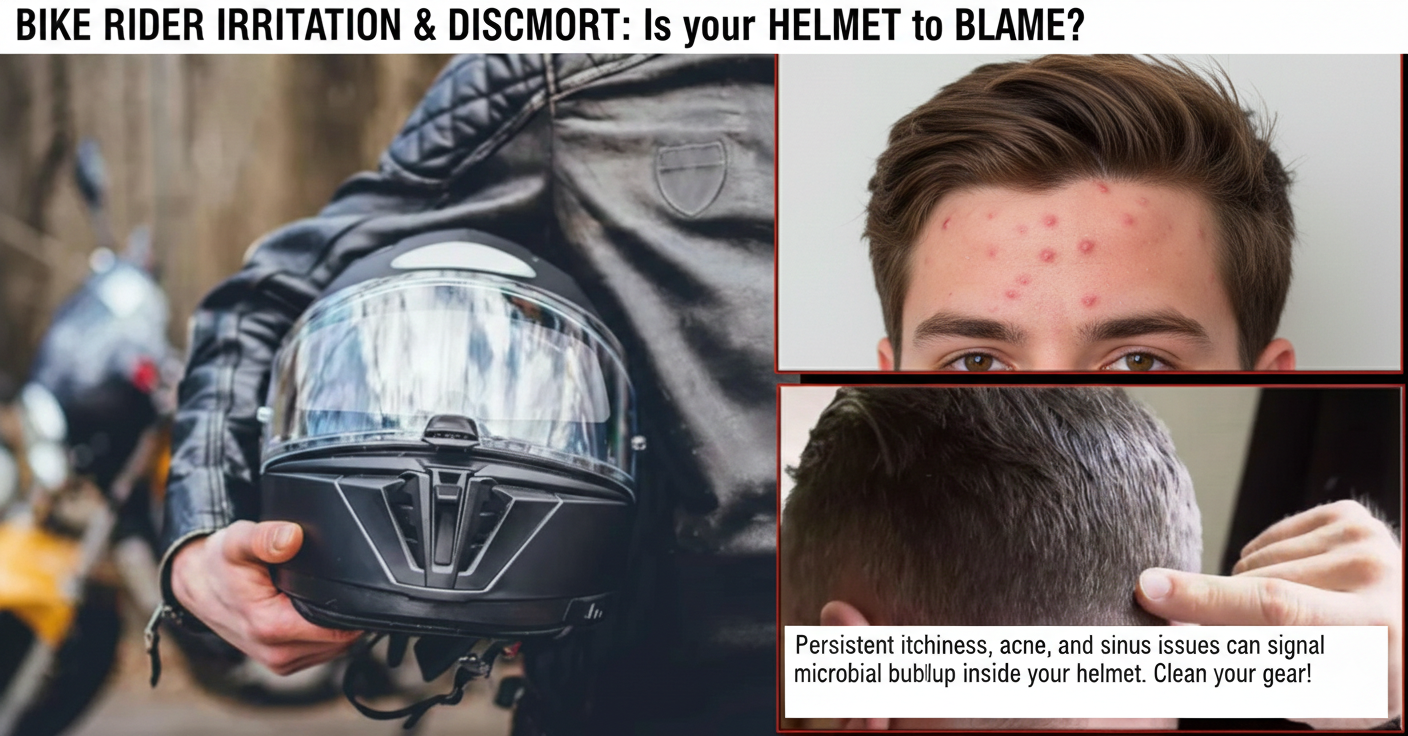
Many riders attribute discomfort to stress, traffic, or pollution. However, warning signs linked to poor helmet hygiene include recurring itchy scalp, acne along the forehead or jawline, persistent helmet odor, sinus pressure during rides, mild dizziness on long commutes, and unusual tiredness afterward. When these symptoms repeatedly follow helmet use, hygiene becomes a likely factor.
What Builds Up Inside a Helmet Over Time
Sweat, natural scalp oils, dead skin cells, and airborne dust settle deep into helmet padding. In warm and humid conditions, bacteria and fungi multiply rapidly. As microbes break down sweat, they release odor-causing compounds that irritate the skin and nasal passages. Organisms such as Staphylococcus species, Pseudomonas, and common environmental fungi can colonize damp liners, especially when helmets are not fully dried or disinfected between uses.
When You’re Breathing What’s Trapped Inside
A snug helmet limits airflow, meaning you re-breathe confined air for extended periods. If microbial growth is present, this increases exposure to spores, allergens, and irritant byproducts. Sensitive riders may experience sinus inflammation, allergic-type symptoms, throat irritation, or mild headaches. While often subtle, repeated exposure over weeks or months can reduce overall riding comfort and energy.
Clear Skin & Scalp Warning Signs
Look for red patches, flaky dandruff-like scaling, small pus-filled bumps (folliculitis), or persistent acne where the helmet makes contact. These issues often worsen in summer due to heat and moisture retention. Once the scalp barrier is compromised, infections recur more easily, turning minor irritation into chronic discomfort.
Patterns That Suggest Your Helmet Is the Cause
Do symptoms improve when you skip riding for a few days? Does odor return quickly after basic cleaning? Are issues worse after long or sweaty rides? If multiple users of the same helmet report irritation, cross-contamination is likely. Surface wiping or sun exposure alone rarely removes deep microbial contamination embedded in padding.
Break the Cycle With Proper Disinfection
FreshPod provides a fast, dry disinfection process using UV-C light combined with ozone technology. In just 3–5 minutes, it eliminates 99.9% of bacteria, viruses, and fungi without moisture or chemical residue. The process penetrates inner padding safely, helping stop recurring irritation at its source. Suitable for home users, delivery fleets, colleges, and dealerships, FreshPod turns helmet hygiene into a simple routine rather than a reactive fix.
Frequently Asked Questions
Can poor helmet hygiene cause recurring headaches?
Yes. Trapped microbial byproducts and allergens inside the helmet can irritate sinuses and contribute to headaches during or after rides.
What skin issues are linked to unclean helmets?
Common issues include folliculitis, acne mechanica, seborrheic dermatitis, fungal infections, and persistent scalp itching.
How does FreshPod help prevent these symptoms?
FreshPod’s UV-C and ozone process eliminates 99.9% of bacteria, viruses, and fungi in a quick dry cycle, reducing microbial buildup that triggers irritation.