
Hidden Germs Inside Your Helmet You Never Knew About
Let me explain something that most riders don’t realize. You may wipe the outside of your helmet after a dusty ride and feel satisfied. But the real problem is not outside — it is inside the padding. The inside of a helmet is warm, dark, and full of sweat after every ride. That is the perfect place for tiny germs to grow. Scientific studies have actually tested used helmets and found surprising amounts of bacteria and fungi living inside them.
What Scientists Found Inside Real Helmets
In one detailed study, researchers examined 130 used motorcycle helmets. They found hundreds of different bacterial and fungal samples inside them. On average, each helmet had multiple types of microbes growing in the padding. The reason is simple: sweat, heat, and poor ventilation create an ideal environment for germs. When a helmet is worn daily and not deeply cleaned, it slowly becomes like a small laboratory for bacteria.
Common Germs Found in Helmets
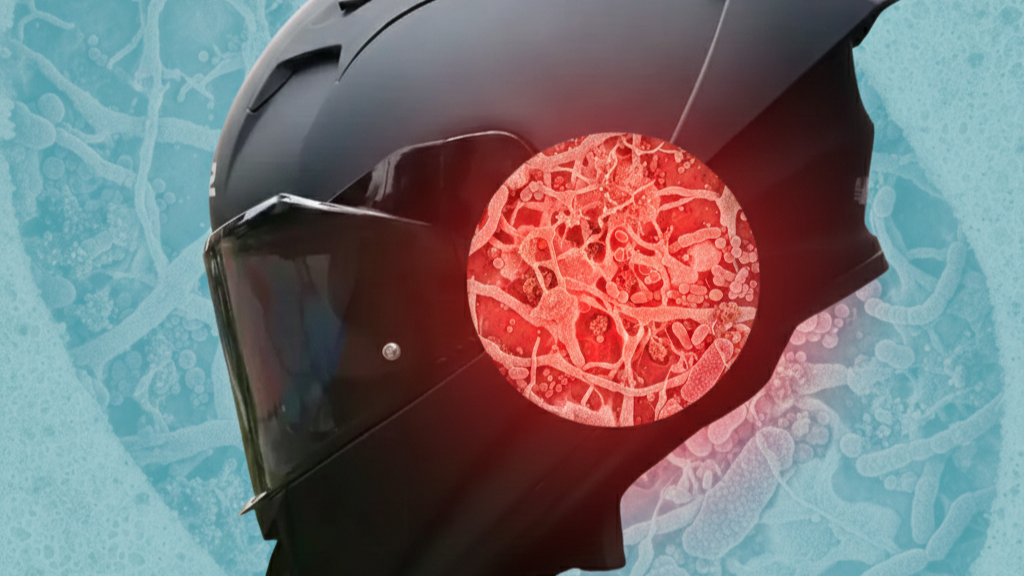
Some of the bacteria commonly found include Staphylococcus aureus, Staphylococcus epidermidis, Escherichia coli (E. coli), Pseudomonas aeruginosa, and Bacillus species. Some strains of Staphylococcus can even be resistant to certain antibiotics. On the fungal side, researchers often find Aspergillus species, Candida, Rhizopus, and Penicillium. Many of these organisms normally live in the environment, but in warm and moist conditions, they can multiply quickly and cause infections.
How These Germs Can Affect You
At first, you may only notice a bad smell from your helmet. Then you might experience an itchy scalp, dandruff, small painful bumps, or pimples around your forehead. In some cases, riders develop folliculitis (infected hair follicles), fungal scalp infections, or skin irritation. If helmets are shared — like in delivery fleets or rental services — there is also a risk of passing germs from one person to another.
Why Most Riders Don’t Realize the Problem
The inside padding of a helmet is not always easy to clean deeply. Surface sprays and wipes only clean what you can see. Sun drying may reduce moisture but does not fully kill strong bacteria or fungi. Washing with water can sometimes damage helmet foam if not done properly. Because germs are invisible, most riders do not think about them until there is a strong smell or skin irritation.
How FreshPod Helps Solve This Problem
FreshPod is designed to clean helmets properly from the inside. It uses UV-C light and ozone to destroy 99.9% of bacteria and fungi in just 3–5 minutes. The process is dry, meaning no water and no chemicals are used. This helps protect the helmet padding and foam while making sure germs are eliminated. Instead of guessing whether your helmet is clean, you can be confident it is sanitized safely and effectively.
Frequently Asked Questions
What bacteria are commonly found inside motorcycle helmets?
Common bacteria include Staphylococcus aureus, Staphylococcus epidermidis, E. coli, Pseudomonas aeruginosa, and Bacillus species, along with fungi such as Aspergillus and Candida.
Can helmet germs cause health problems?
Yes. They can cause bad odor, scalp infections, folliculitis, fungal issues, acne, and irritation. Shared helmets may also spread germs between users.
How can I properly sanitize my helmet?
Deep sanitization methods such as UV-C and ozone-based systems help eliminate bacteria and fungi effectively without damaging helmet materials.