
The Science Behind Helmet Bacteria Growth
On the outside, your helmet looks like a simple safety tool. But inside, it becomes a small environment of its own. After every ride, sweat, tiny skin particles, natural oils, and dust collect inside the padding. In warm climates where temperatures reach 30–40°C, this creates the perfect condition for bacteria and fungi to grow quickly. What seems harmless at first can turn into heavy microbial growth within just a few days.
How Bacteria Multiply So Fast
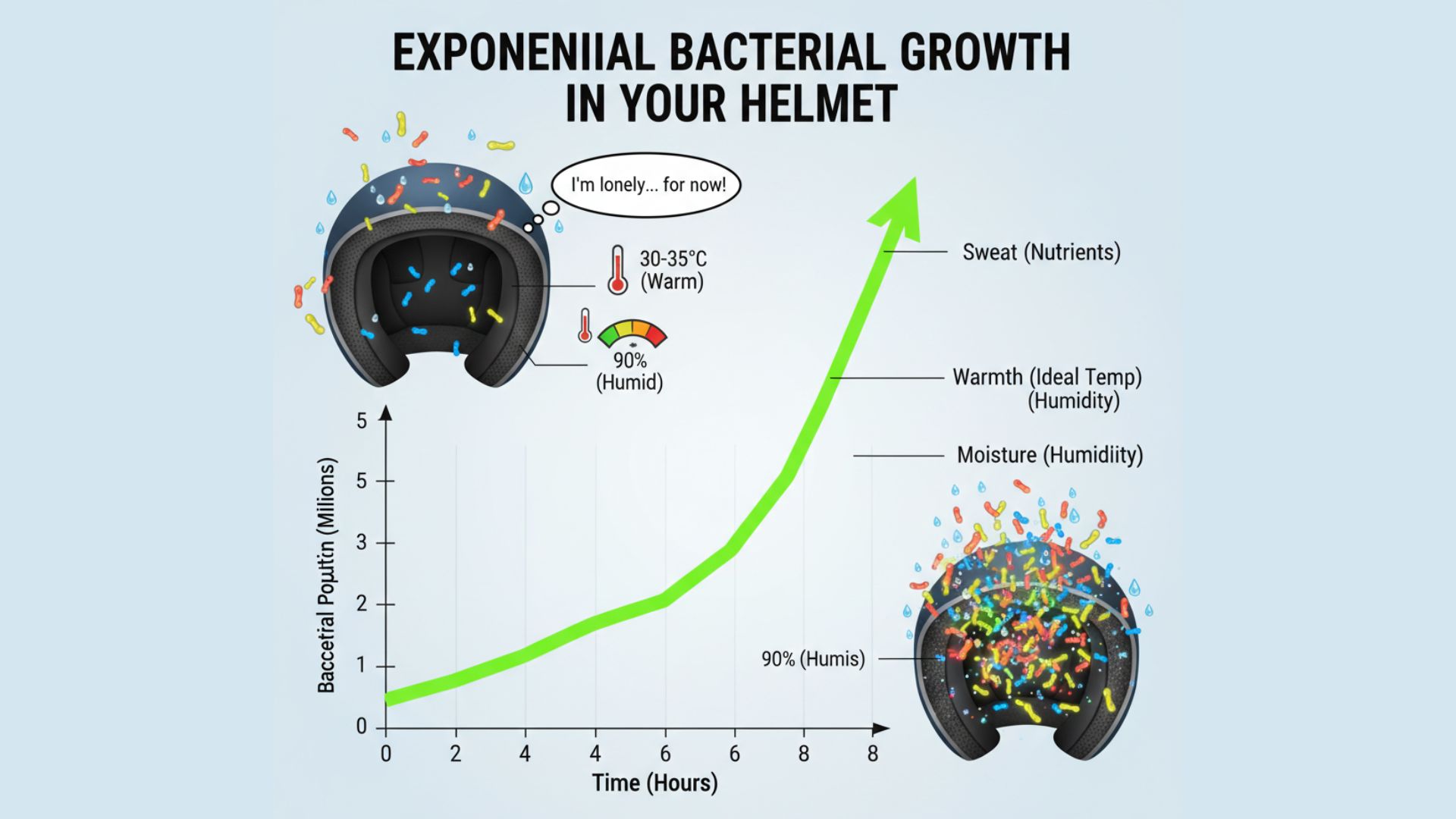
Bacteria reproduce through a process called binary fission. This means one bacterium splits into two. Under ideal conditions, this can happen every 20–30 minutes. Because of this rapid division, one single bacterium can grow into thousands or even millions within hours. Fungi spread through spores and grow in thread-like structures in moist areas. For microbes to grow, they need four main things: food (like sweat and dead skin), water (moisture), the right temperature (usually 25–40°C), and time. Helmets provide all of these.
Why Helmet Interiors Are Ideal for Germ Growth
The inside of a helmet is dark and enclosed. It traps body heat and limits airflow. Sweat soaks into soft foam and fabric, providing both moisture and nutrients. The internal temperature during a ride often stays within the ideal range for common bacteria. When helmets are used daily without proper sanitization, microbes continue multiplying. Shared helmets make this worse because different users introduce new bacteria each time.
The Main Scientific Factors That Help Germs Grow
Temperature: Most helmet bacteria grow best between 25–40°C. Moisture: Sweat increases humidity inside the helmet, which microbes need. Nutrients: Proteins and oils from sweat act as food. pH Level: Slight acidity from sweat supports skin-related bacteria. Time: If a helmet is not disinfected regularly, bacteria keep multiplying day after day. Studies show that helmets used for years without deep cleaning have much higher microbial contamination.
What Research on Real Helmets Shows
Scientific studies on used motorcycle helmets have found high levels of bacteria and fungi. Common bacteria include Staphylococcus aureus, Staphylococcus epidermidis, Escherichia coli, and Pseudomonas aeruginosa. Fungi such as Aspergillus and Candida are also frequently detected. Research shows that helmets that are rarely cleaned have significantly higher contamination levels compared to those that are maintained properly.
How FreshPod Stops the Growth Cycle
FreshPod uses UV-C light and ozone technology to interrupt the growth process. UV-C damages microbial DNA and prevents bacteria from reproducing. Ozone helps destroy cell structures. Together, they eliminate 99.9% of bacteria, viruses, and fungi in just 3–5 minutes. Since the process is dry, it does not add moisture that could encourage new growth. This breaks the cycle and keeps helmets hygienic.
Frequently Asked Questions
What temperature allows bacteria to grow fastest in helmets?
Most common helmet bacteria grow best between 25–40°C, which matches the internal temperature of helmets during rides in warm climates.
Why does sweat increase bacterial growth?
Sweat provides moisture and nutrients such as proteins and salts, creating ideal conditions for bacteria and fungi to multiply.
How can bacterial growth inside helmets be stopped?
Using dry disinfection methods such as UV-C and ozone helps eliminate microbes without adding moisture, preventing further growth.